
Thursday, April 12, 2018
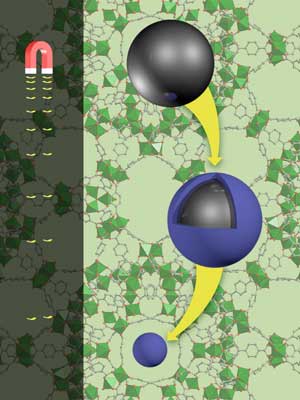
Form damages function and magnetism suffers
Researchers discover mechanism that decreases the magnetism of metallic core particles with a metal-organic framework shell, opening doors to new material designs.

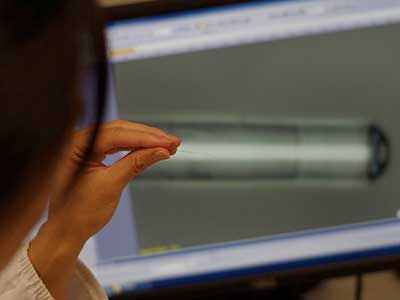
Tiny probe can see and take body temperatures
Researchers have invented a world-first tiny fibre-optic probe that can simultaneously measure temperature and see deep inside the body.
Wednesday, April 11, 2018
Chaos makes quantum sensors work more precisely
Physicists have developed a method with which the measurement accuracy of high-precision sensors could be improved by a further 70 percent.
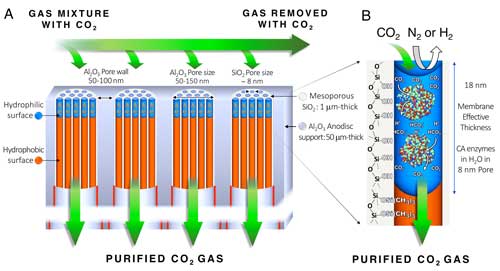
Biologically inspired nanomembrane purges coal-fired smoke of greenhouse gases
Scientists have developed a biologically inspired membrane intended to cleanse carbon dioxide almost completely from the smoke of coal-fired power plants.
Researchers engineer new pathways for self-assembled nanostructures
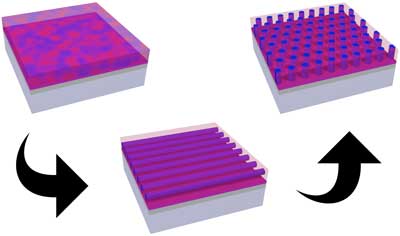
Self-assembly is driven mainly by the system?s desire to minimize its energy and achieve equilibrium, but kinetic effects can also play a strong role. Typically, these effects are viewed as complications to be overcome, but a collaboration of researchers has recently shown that these effects can be exploited to engineer a nanostructure in a polymer thin film.
Sensing interactions between molecules
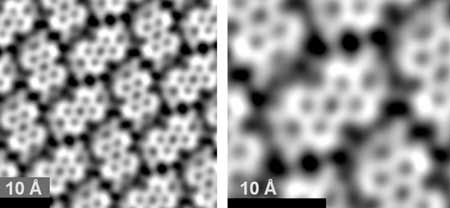
Nanoscientists have developed an atomically defined probe tip with extraordinary stability which enables them to image molecular structures by atomic force microscopy.
World's first biosensor chips based on copper and graphene oxide
Researchers have developed biosensor chips of unprecedented sensitivity, which are based on copper instead of the conventionally used gold.

Subscribe to:
Posts (Atom)