
Tuesday, March 27, 2018
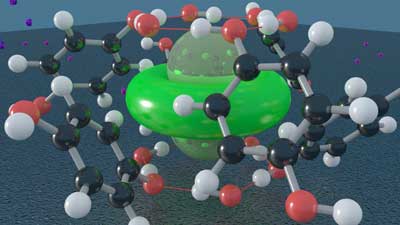
Molecular prison forces diatomic inmates to cell floor
Organic prison too crowded for molecular inmates to move about freely.

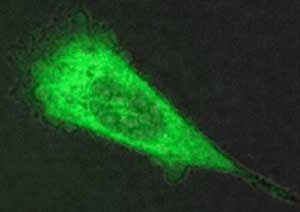
Cell-penetrating 'nanodrills' show promise for intracellular drug delivery
Researchers have created new nanomaterials able to cross cell membranes, establishing a novel platform for the intracellular delivery of molecular drugs and other cargo.
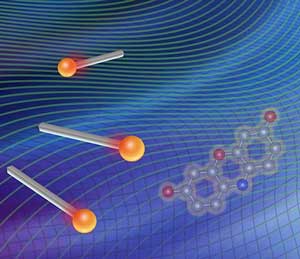
Understanding nanocatalysts' 'talk' could better inform design
Scientists published a paper, the culmination of years of study, that lays out a conceptual framework for understanding how a nanocatalyst particle works. The work could help inform better design of synthetic nanocatalysts down the road.
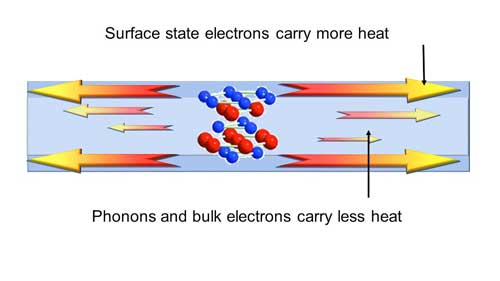
Thin-film could help manage heat flow in future devices
Researchers have demonstrated the ability of a thin film to conduct heat on just its surfaces, identifying a potential solution to overheating in electronic devices such as phones and computers.
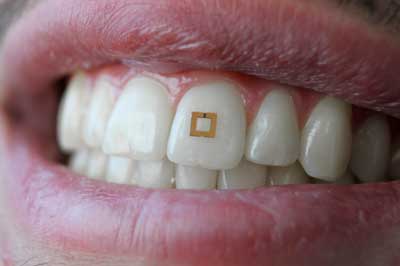
Tiny, tooth-mounted sensors that can track what you eat
Wireless real-time monitoring could add precision to the linkage between diet and health.
Metal-oxide/graphene nanosheet composite exhibits unprecedented energy storage properties
Single-layer metal oxide nanosheets sandwiched between graphene layers exhibit record energy storage figures of merit.
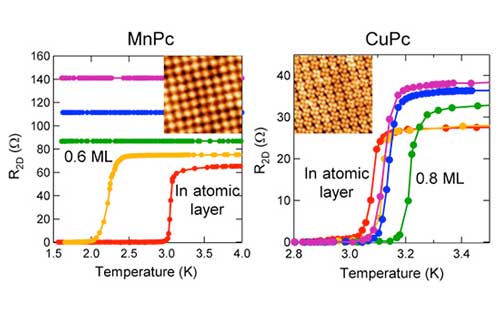
Modulating Superconductivity of 2D Atomic Layers of Indium with Charge Transfer from Self-assembled Organic Molecules
Charge and spin transfer from copper-phthalocyanine organic molecules self-assembled on superconducting atomic layers of indium modifies the superconducting transition temperature of the indium.
Subscribe to:
Posts (Atom)