
Tuesday, March 13, 2018
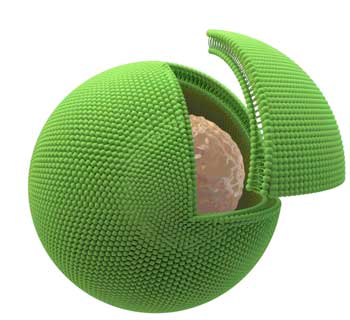
Artificial and biological cells work together as mini chemical factories
Researchers have fused living and non-living cells for the first time in a way that allows them to work together, paving the way for new applications.

Monday, March 12, 2018
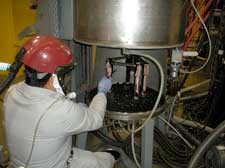
New nanotechnology workplace design recommendations
The National Institute for Occupational Safety and Health (NIOSH) launched four new products this week intended to provide options to companies for controlling possible exposure of their workers to nanomaterials on the job.
How to build a better railway - in (almost) every cell in your body
New work shows how a microscopic 'railway' system in our cells can optimise its structure to better suit bodies' needs.
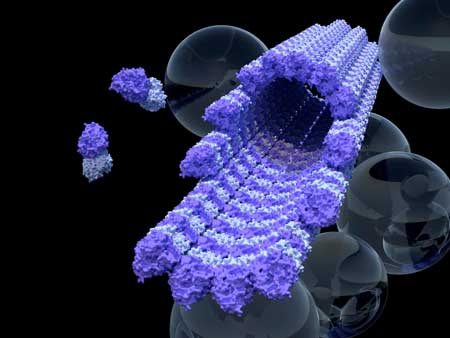
Extracellular vesicles could be personalized drug delivery vehicles
Creating enough nanovesicles to inexpensively serve as a drug delivery system may be as simple as putting the cells through a sieve, according to an international team of researchers who used mouse autologous immune cells to create large amounts of fillable nanovesicles to deliver drugs to tumors in mice.
Glass matters
Researchers find that the chemical topology of silica can influence the effectiveness of many chemical processes that use it.
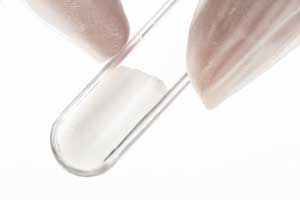
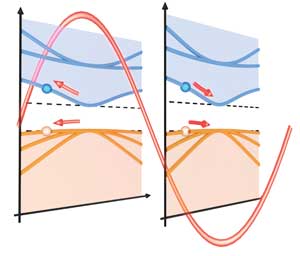
A milestone in petahertz electronics
Observation of attosecond optical-field-enhanced carrier injection into the GaAs conduction band.
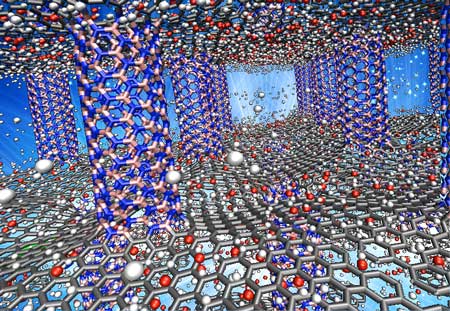
Study IDs 'white graphene' architecture with unprecedented hydrogen storage capacity
Engineers have zeroed in on the optimal architecture for storing hydrogen in 'white graphene' nanomaterials - a design like a Lilliputian skyscraper with 'floors' of boron nitride sitting one atop another and held precisely 5.2 angstroms apart by boron nitride pillars.
Subscribe to:
Posts (Atom)