
Thursday, February 1, 2018
Engineering research gives optical switches the 'contrast' of electronic transistors
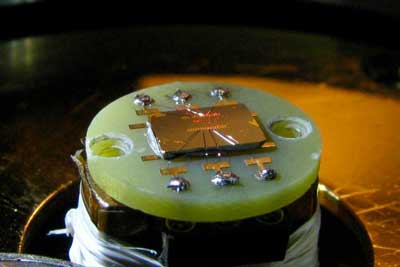
Engineers have taken an important step toward the creation of a working optical transistor: precisely controlling the mixing of optical signals via tailored electric fields, and obtaining outputs with a near perfect contrast and extremely large on/off ratios.

Nanofoam catalysts efficiently generates hydrogen from water
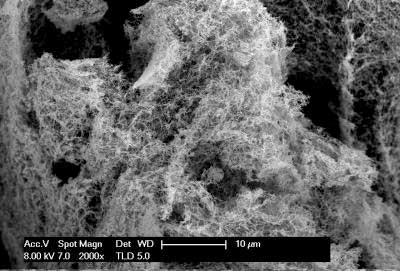
Researchers have found a way to more efficiently generate hydrogen from water - an important key to making clean energy more viable.
Physicists generate terahertz waves with spin current flow
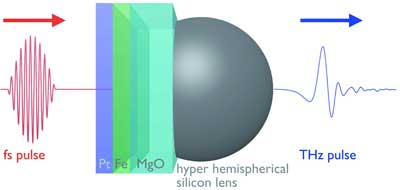
Physicists use a quantum magnetic current flow, so-called spin current, in magnetic metal nanostructures. The cost-effective and material-saving technology has the potential for industry applications.
Engineers develop flexible lithium battery for wearable electronics
Shaped like a spine, new design enables remarkable flexibility, high energy density, and stable voltage, no matter how it is flexed or twisted.

New magnet-based drug delivery system shows promise for cancer treatment
A team of researchers has developed a non-invasive method of delivering drugs directly to cancerous tissue using magnetic forces, a form of treatment that could significantly reduce the toxic side effects of chemotherapy.
Self-sssembled 'hairy' nanoparticles could give a double punch to cancer
'Hairy nanoparticles made with light-sensitive materials that assemble themselves could one day become nano-carriers providing doctors a new way to simultaneously introduce both therapeutic drugs and cancer-fighting heat into tumors.

Macromolecular order in the plastic kingdom
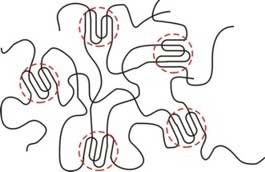
Researchers have found out how the regularity of polypropylene molecules and thermal treatment affect the mechanical properties of the end product. Their new insights make it possible to synthesize a material with predetermined properties, such as elasticity or hardness.
Subscribe to:
Posts (Atom)